先来先服务(FCFS)CPU调度程序 | 第二部分(具有不同到达时间的进程)
我们已经讨论了具有相同到达时间的进程的FCFS调度。在这篇文章中,我们讨论了进程具有不同到达时间的场景。给定n个进程,以及它们的执行时间和到达时间,任务是使用FCFS(先来先服务)调度算法找到平均等待时间和平均周转时间。
FIFO(先进先出)简单地根据它们到达就绪队列的顺序对进程进行排队。在这里,先到的进程将首先被执行,下一个进程只有在前一个进程完全执行完毕后才开始。
- 完成时间(Completion Time):进程完成执行的时间。
- 周转时间(Turn Around Time):完成时间和到达时间的时间差。周转时间 = 完成时间 - 到达时间
- 等待时间(Waiting Time, W.T):周转时间和执行时间的时间差。
等待时间 = 周转时间 - 执行时间。
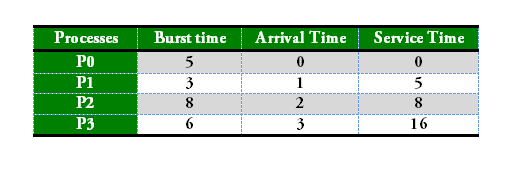
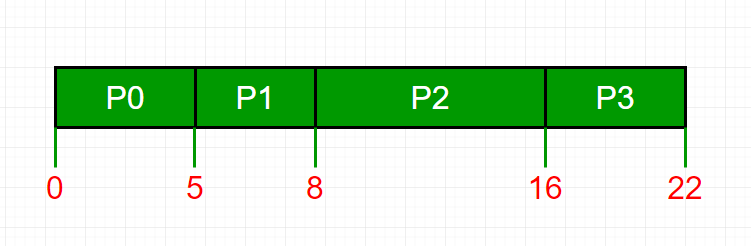
进程     等待时间 : 服务时间 - 到达时间
   P0                        0 - 0   = 0
   P1                        5 - 1   = 4
   P2                        8 - 2   = 6
   P3                        16 - 3  = 13
平均等待时间: (0 + 4 + 6 + 13) / 4 = 5.75
服务时间(Service Time):也称为执行时间,这是一个进程完成其在CPU上的执行所需的时间。它表示CPU执行该特定进程的指令所花费的时间。
等待时间:它指的是一个进程在就绪队列中等待,直到它有机会在CPU上执行的总时间。
与具有相同到达时间的FCFS代码相比的代码变化:计算等待时间:当前进程之前所有进程开始执行所需的时间(即所有前一个进程的执行时间) - 当前进程的到达时间
wait_time[i] = (bt[0] + bt[1] +…… bt[i-1] ) – arrival_time[i]
实现:
1- 输入进程及其执行时间(bt)和到达时间(at)
2- 计算所有其他进程的等待时间,即对于给定的进程i:
       wt[i] = (bt[0] + bt[1] +...... bt[i-1]) - at[i]
3- 现在计算周转时间
          = 等待时间 + 执行时间,对所有进程
4- 平均等待时间 =
                   总等待时间 / 进程数
5- 平均周转时间 =
                总周转时间 / 进程数
示例1:
cpp
//Process Synced, dynamic input, c++ easy to understand code
#include<iostream>
#include<stdlib.h>
using namespace std;
//class process with all the time values and functions
class Process{
	int id, bt, at, ct, tat, wt;
	public:
	void input(Process*,int );
	void calc(Process *,int);
	void show(Process*,int);
	void sort(Process *, int);
};
//main function
int main(){
	int n;
	cout<<"\nEnter the no of processes in your system:\n";
	cin>>n;
	Process *p = new Process[n];
	Process f;
	f.input(p,n);
	f.sort(p, n);
	f.calc(p,n);
	f.show(p,n);
	return 0;
}
//taking input arrival and burst times for all processes
void Process::input(Process *p,int n){
	for(int i = 0;i<n;i++){
		cout<<"\nEnter pival time for process "<<i+1<<":\n";
		cin>>p[i].at;
		cout<<"\nEnter burst time for process "<<i+1<<":\n";
		cin>>p[i].bt;
		p[i].id = i+1;
	}
}
//calculating waiting, turn-around and completion time
void Process::calc(Process*p, int n){
	int sum = 0;
	sum = sum + p[0].at;
	for(int i = 0;i<n;i++){
		sum = sum + p[i].bt;
		p[i].ct = sum;
		p[i].tat = p[i].ct - p[i].at;
		p[i].wt = p[i].tat - p[i].bt;
		if(sum<p[i+1].at){
			int t = p[i+1].at-sum;
			sum = sum+t;
		}
	}
}
//Sorting processes with respect to arrival times (needed for synchronized input)
void Process::sort(Process*p, int n){
	for(int i=0;i<n-1;i++){
		for(int j=0;j<n-i-1;j++){
			if(p[j].at>p[j+1].at){
				int temp;
				//sorting burst times
				temp = p[j].bt;
				p[j].bt = p[j+1].bt;
				p[j+1].bt = temp;
				//sorting arrival times
				temp = p[j].at;
				p[j].at = p[j+1].at;
				p[j+1].at = temp;
				//sorting their respective IDs
				temp = p[j].id;
				p[j].id = p[j+1].id;
				p[j+1].id = temp;
			}
		}
	}
}
//display function
void Process::show(Process*p, int n){
	cout<<"Process\tArrival\tBurst\tWaiting\tTurn Around\tCompletion\n";
	for(int i =0;i<n;i++){
		cout<<" P["<<p[i].id<<"]\t "<<p[i].at<<"\t"<<p[i].bt<<"\t"<<p[i].wt<<"\t "<<p[i].tat<<"\t\t"<<p[i].ct<<"\n";
	}
}
java
// Java program for implementation of FCFS
// scheduling with different arrival time
public class GFG{


// Function to find the waiting time for all
// processes
static void findWaitingTime(int processes[], int n, int bt[], int wt[], int at[])
{
	int service_time[] = new int[n];
	service_time[0] = at[0];
	wt[0] = 0;

	// calculating waiting time
	for (int i = 1; i < n ; i++)
	{
		//representing wasted time in queue
		int wasted=0;
		// Add burst time of previous processes
		service_time[i] = service_time[i-1] + bt[i-1];

		// Find waiting time for current process =
		// sum - at[i]
		wt[i] = service_time[i] - at[i];

		// If waiting time for a process is in negative
		// that means it is already in the ready queue
		// before CPU becomes idle so its waiting time is 0
		// wasted time is basically time for process to wait after a process is over
		if (wt[i] < 0) {
			wasted = Math.abs(wt[i]);
			wt[i] = 0;
		}
		//Add wasted time
		service_time[i] = service_time[i] + wasted;
	}
}

// Function to calculate turn around time
static void findTurnAroundTime(int processes[], int n, int bt[],
									int wt[], int tat[])
{
	// Calculating turnaround time by adding bt[i] + wt[i]
	for (int i = 0; i < n ; i++)
		tat[i] = bt[i] + wt[i];
}

// Function to calculate average waiting and turn-around
// times.
static void findavgTime(int processes[], int n, int bt[], int at[])
{
	int wt[] = new int[n], tat[] = new int[n];

	// Function to find waiting time of all processes
	findWaitingTime(processes, n, bt, wt, at);

	// Function to find turn around time for all processes
	findTurnAroundTime(processes, n, bt, wt, tat);

	// Display processes along with all details
	System.out.print("Processes " + " Burst Time " + " Arrival Time "
		+ " Waiting Time " + " Turn-Around Time "
		+ " Completion Time \n");
	int total_wt = 0, total_tat = 0;
	for (int i = 0 ; i < n ; i++)
	{
		total_wt = total_wt + wt[i];
		total_tat = total_tat + tat[i];
		int compl_time = tat[i] + at[i];
		System.out.println(i+1 + "\t\t" + bt[i] + "\t\t"
			+ at[i] + "\t\t" + wt[i] + "\t\t "
			+ tat[i] + "\t\t " + compl_time);
	}

	System.out.print("Average waiting time = "
		+ (float)total_wt / (float)n);
	System.out.print("\nAverage turn around time = "
		+ (float)total_tat / (float)n);
}

// Driver code

	public static void main(String args[]) {
		// Process id's
	int processes[] = {1, 2, 3};
	int n = processes.length;

	// Burst time of all processes
	int burst_time[] = {5, 9, 6};

	// Arrival time of all processes
	int arrival_time[] = {0, 3, 6};

	findavgTime(processes, n, burst_time, arrival_time);

	}
}

/*This code is contributed by PrinciRaj1992*/
py
# Python3 program for implementation of FCFS
# scheduling with different arrival time

# Function to find the waiting time
# for all processes
def findWaitingTime(processes, n, bt, wt, at):
	service_time = [0] * n
	service_time[0] = 0
	wt[0] = 0

	# calculating waiting time
	for i in range(1, n):

		# Add burst time of previous processes
		service_time[i] = (service_time[i - 1] +
									bt[i - 1])

		# Find waiting time for current
		# process = sum - at[i]
		wt[i] = service_time[i] - at[i]

		# If waiting time for a process is in
		# negative that means it is already
		# in the ready queue before CPU becomes
		# idle so its waiting time is 0
		if (wt[i] < 0):
			wt[i] = 0

# Function to calculate turn around time
def findTurnAroundTime(processes, n, bt, wt, tat):

	# Calculating turnaround time by
	# adding bt[i] + wt[i]
	for i in range(n):
		tat[i] = bt[i] + wt[i]


# Function to calculate average waiting
# and turn-around times.
def findavgTime(processes, n, bt, at):
	wt = [0] * n
	tat = [0] * n

	# Function to find waiting time
	# of all processes
	findWaitingTime(processes, n, bt, wt, at)

	# Function to find turn around time for
	# all processes
	findTurnAroundTime(processes, n, bt, wt, tat)

	# Display processes along with all details
	print("Processes Burst Time Arrival Time	 Waiting",
		"Time Turn-Around Time Completion Time \n")
	total_wt = 0
	total_tat = 0
	for i in range(n):

		total_wt = total_wt + wt[i]
		total_tat = total_tat + tat[i]
		compl_time = tat[i] + at[i]
		print(" ", i + 1, "\t\t", bt[i], "\t\t", at[i],
			"\t\t", wt[i], "\t\t ", tat[i], "\t\t ", compl_time)

	print("Average waiting time = %.5f "%(total_wt /n))
	print("\nAverage turn around time = ", total_tat / n)

# Driver code
if __name__ =="__main__":

	# Process id's
	processes = [1, 2, 3]
	n = 3

	# Burst time of all processes
	burst_time = [5, 9, 6]

	# Arrival time of all processes
	arrival_time = [0, 3, 6]

	findavgTime(processes, n, burst_time,
							arrival_time)

# This code is contributed
# Shubham Singh(SHUBHAMSINGH10)
c#
// C# program for implementation of FCFS
// scheduling with different arrival time
using System;

public class GFG{


// Function to find the waiting time for all
// processes
static void findWaitingTime(int []processes, int n, int []bt, int []wt, int []at)
{
	int []service_time = new int[n];
	service_time[0] = 0;
	wt[0] = 0;

	// calculating waiting time
	for (int i = 1; i < n ; i++)
	{
		// Add burst time of previous processes
		service_time[i] = service_time[i-1] + bt[i-1];

		// Find waiting time for current process =
		// sum - at[i]
		wt[i] = service_time[i] - at[i];

		// If waiting time for a process is in negative
		// that means it is already in the ready queue
		// before CPU becomes idle so its waiting time is 0
		if (wt[i] < 0)
			wt[i] = 0;
	}
}

// Function to calculate turn around time
static void findTurnAroundTime(int []processes, int n, int[] bt,
									int []wt, int[] tat)
{
	// Calculating turnaround time by adding bt[i] + wt[i]
	for (int i = 0; i < n ; i++)
		tat[i] = bt[i] + wt[i];
}

// Function to calculate average waiting and turn-around
// times.
static void findavgTime(int []processes, int n, int []bt, int []at)
{
	int []wt = new int[n]; int []tat = new int[n];

	// Function to find waiting time of all processes
	findWaitingTime(processes, n, bt, wt, at);

	// Function to find turn around time for all processes
	findTurnAroundTime(processes, n, bt, wt, tat);

	// Display processes along with all details
	Console.Write("Processes " + " Burst Time " + " Arrival Time "
		+ " Waiting Time " + " Turn-Around Time "
		+ " Completion Time \n");
	int total_wt = 0, total_tat = 0;
	for (int i = 0 ; i < n ; i++)
	{
		total_wt = total_wt + wt[i];
		total_tat = total_tat + tat[i];
		int compl_time = tat[i] + at[i];
		Console.WriteLine(i+1 + "\t\t" + bt[i] + "\t\t"
			+ at[i] + "\t\t" + wt[i] + "\t\t "
			+ tat[i] + "\t\t " + compl_time);
	}

	Console.Write("Average waiting time = "
		+ (float)total_wt / (float)n);
	Console.Write("\nAverage turn around time = "
		+ (float)total_tat / (float)n);
}

// Driver code

	public static void Main(String []args) {
		// Process id's
	int []processes = {1, 2, 3};
	int n = processes.Length;

	// Burst time of all processes
	int []burst_time = {5, 9, 6};

	// Arrival time of all processes
	int []arrival_time = {0, 3, 6};

	findavgTime(processes, n, burst_time, arrival_time);

	}
}
// This code is contributed by Princi Singh
js
<script>

// JavaScript program for implementation of FCFS
// scheduling with different arrival time

// Function to find the waiting time for all
// processes
function findWaitingTime(processes , n , bt , wt , at)
{
	var service_time = Array.from({length: n}, (_, i) => 0);
	service_time[0] = at[0];
	wt[0] = 0;

	// calculating waiting time
	for (var i = 1; i < n ; i++)
	{
		//representing wasted time in queue
		var wasted=0;
		// Add burst time of previous processes
		service_time[i] = service_time[i-1] + bt[i-1];

		// Find waiting time for current process =
		// sum - at[i]
		wt[i] = service_time[i] - at[i];

		// If waiting time for a process is in negative
		// that means it is already in the ready queue
		// before CPU becomes idle so its waiting time is 0
		// wasted time is basically time for process to
		// wait after a process is over
		if (wt[i] < 0) {
			wasted = Math.abs(wt[i]);
			wt[i] = 0;
		}
		// Add wasted time
		service_time[i] = service_time[i] + wasted;
	}
}

// Function to calculate turn around time
function findTurnAroundTime(processes , n , bt, wt , tat)
{
	// Calculating turnaround time by adding bt[i] + wt[i]
	for (var i = 0; i < n ; i++)
		tat[i] = bt[i] + wt[i];
}

// Function to calculate average waiting and turn-around
// times.
function findavgTime(processes , n , bt , at)
{
	var wt = Array.from({length: n}, (_, i) => 0.0);
	var tat = Array.from({length: n}, (_, i) => 0.0);

	// Function to find waiting time of all processes
	findWaitingTime(processes, n, bt, wt, at);

	// Function to find turn around time for all processes
	findTurnAroundTime(processes, n, bt, wt, tat);

	// Display processes along with all details
	document.write("Processes " + " Burst Time " + " Arrival Time "
		+ " Waiting Time " + " Turn-Around Time "
		+ " Completion Time <br>");
	var total_wt = 0, total_tat = 0;
	for (var i = 0 ; i < n ; i++)
	{
		total_wt = total_wt + wt[i];
		total_tat = total_tat + tat[i];
		var compl_time = tat[i] + at[i];
		document.write(i+1 + "??" + bt[i]
		+ "??"
			+ at[i] + "??" + wt[i] + "??"
			+ tat[i] + "??" + compl_time+"<br>");
	}

	document.write("<br>Average waiting time = "
		+ total_wt/n +"<br>");
	document.write("<br>Average turn around time = "
		+ total_tat/n+"<br>");
}

// Driver code


	// Process id's
var processes = [1, 2, 3];
var n = processes.length;

// Burst time of all processes
var burst_time = [5, 9, 6];

// Arrival time of all processes
var arrival_time = [0, 3, 6];

findavgTime(processes, n, burst_time, arrival_time);


// This code is contributed by 29AjayKumar

</script>
输出:
Processes  Burst Time  Arrival Time  Waiting Time  Turn-Around Time  Completion Time
 1        5        0        0         5         5
 2        9        3        2         11         14
 3        6        6        8         14         20
Average waiting time = 3.33333
Average turn around time = 10.0
在这些程序中,用户被要求输入进程数量及其各自的执行时间。然后,程序计算每个进程的等待时间和周转时间,并输出平均等待时间和平均周转时间。最后,程序显示一个表格,显示每个进程的详细信息。
示例2:
::: 示例2
cpp
#include<iostream>
using namespace std;

int main()
{
	int n, burst_time[20], waiting_time[20], turnaround_time[20];
	float avg_waiting_time = 0, avg_turnaround_time = 0;

	cout<<"Enter total number of processes(maximum 20): ";
	cin>>n;

	cout<<"\nEnter Process Burst Time\n";
	for(int i=0;i<n;i++)
	{
		cout<<"P["<<i+1<<"]: ";
		cin>>burst_time[i];
	}

	waiting_time[0] = 0; // Waiting time for first process is 0

	// Calculating waiting time
	for(int i=1;i<n;i++)
	{
		waiting_time[i] = 0;
		for(int j=0;j<i;j++)
		{
			waiting_time[i] += burst_time[j];
		}
	}

	// Calculating turnaround time by adding burst_time and waiting_time
	for(int i=0;i<n;i++)
	{
		turnaround_time[i] = burst_time[i] + waiting_time[i];
		avg_turnaround_time += turnaround_time[i];
	}

	avg_turnaround_time /= n;
	cout<<"\nAverage Turnaround Time: "<<avg_turnaround_time<<"ms\n";

	// Calculating average waiting time
	for(int i=0;i<n;i++)
	{
		avg_waiting_time += waiting_time[i];
	}

	avg_waiting_time /= n;
	cout<<"\nAverage Waiting Time: "<<avg_waiting_time<<"ms\n\n";

	cout<<"Process\tBurst Time\tWaiting Time\tTurnaround Time\n";
	for(int i=0;i<n;i++)
	{
		cout<<"P["<<i+1<<"]\t"<<burst_time[i]<<"\t\t"<<waiting_time[i]<<"\t\t"<<turnaround_time[i]<<endl;
	}

	return 0;
}
java
import java.util.Scanner;

public class ProcessScheduling {

	public static void main(String[] args) {
		int n, burst_time[], waiting_time[], turnaround_time[];
		float avg_waiting_time = 0, avg_turnaround_time = 0;

		Scanner sc = new Scanner(System.in);
		System.out.print("Enter total number of processes (maximum 20): ");
		n = sc.nextInt();
		burst_time = new int[n];
		waiting_time = new int[n];
		turnaround_time = new int[n];

		System.out.println("\nEnter Process Burst Time");
		for (int i = 0; i < n; i++) {
			System.out.print("P[" + (i+1) + "]: ");
			burst_time[i] = sc.nextInt();
		}

		waiting_time[0] = 0; // Waiting time for first process is 0

		// Calculating waiting time
		for (int i = 1; i < n; i++) {
			waiting_time[i] = 0;
			for (int j = 0; j < i; j++) {
				waiting_time[i] += burst_time[j];
			}
		}

		// Calculating turnaround time by adding burst_time and waiting_time
		for (int i = 0; i < n; i++) {
			turnaround_time[i] = burst_time[i] + waiting_time[i];
			avg_turnaround_time += turnaround_time[i];
		}

		avg_turnaround_time /= n;
		System.out.println("\nAverage Turnaround Time: " + avg_turnaround_time + "ms");

		// Calculating average waiting time
		for (int i = 0; i < n; i++) {
			avg_waiting_time += waiting_time[i];
		}

		avg_waiting_time /= n;
		System.out.println("\nAverage Waiting Time: " + avg_waiting_time + "ms\n");

		System.out.println("Process\tBurst Time\tWaiting Time\tTurnaround Time");
		for (int i = 0; i < n; i++) {
			System.out.println("P[" + (i+1) + "]\t" + burst_time[i] + "\t\t" + waiting_time[i] + "\t\t" + turnaround_time[i]);
		}

		sc.close();
	}

}
py
# Python program to calculate
# waiting time, turnaround time,
# and average waiting time and
# turnaround time of a process

# Function to calculate waiting time,
# turnaround time and average waiting time
# and turnaround time of a process
def calculateTime(n, burst_time):
	waiting_time = [0] * n
	turnaround_time = [0] * n
	avg_waiting_time = 0
	avg_turnaround_time = 0

	waiting_time[0] = 0 # Waiting time for first process is 0

	# Calculating waiting time
	for i in range(1, n):
		waiting_time[i] = 0
		for j in range(i):
			waiting_time[i] += burst_time[j]

	# Calculating turnaround time by adding burst_time and waiting_time
	for i in range(n):
		turnaround_time[i] = burst_time[i] + waiting_time[i]
		avg_turnaround_time += turnaround_time[i]

	avg_turnaround_time /= n
	print(f"\nAverage Turnaround Time: {avg_turnaround_time}ms")

	# Calculating average waiting time
	for i in range(n):
		avg_waiting_time += waiting_time[i]

	avg_waiting_time /= n
	print(f"\nAverage Waiting Time: {avg_waiting_time}ms\n")

	print("Process\tBurst Time\tWaiting Time\tTurnaround Time")
	for i in range(n):
		print(f"P[{i+1}]\t{burst_time[i]}\t\t{waiting_time[i]}\t\t{turnaround_time[i]}")

# Driver code
if __name__ == '__main__':
	n = int(input("Enter total number of processes(maximum 20): "))

	burst_time = []
	print("\nEnter Process Burst Time")
	for i in range(n):
		burst_time.append(int(input(f"P[{i+1}]: ")))

	calculateTime(n, burst_time)
c#
using System;

class Program {
	static void Main(string[] args)
	{
		int n;
		int[] burst_time = new int[20];
		int[] waiting_time = new int[20];
		int[] turnaround_time = new int[20];
		float avg_waiting_time = 0;
		float avg_turnaround_time = 0;

		Console.Write(
			"Enter total number of processes(maximum 20): ");
		n = Convert.ToInt32(Console.ReadLine());

		Console.WriteLine("\nEnter Process Burst Time");
		for (int i = 0; i < n; i++) {
			Console.Write("P[" + (i + 1) + "]: ");
			burst_time[i]
				= Convert.ToInt32(Console.ReadLine());
		}

		waiting_time[0]
			= 0; // Waiting time for first process is 0

		// Calculating waiting time
		for (int i = 1; i < n; i++) {
			waiting_time[i] = 0;
			for (int j = 0; j < i; j++) {
				waiting_time[i] += burst_time[j];
			}
		}

		// Calculating turnaround time by adding burst_time
		// and waiting_time
		for (int i = 0; i < n; i++) {
			turnaround_time[i]
				= burst_time[i] + waiting_time[i];
			avg_turnaround_time += turnaround_time[i];
		}

		avg_turnaround_time /= n;
		Console.WriteLine("\nAverage Turnaround Time: "
						+ avg_turnaround_time + "ms\n");

		// Calculating average waiting time
		for (int i = 0; i < n; i++) {
			avg_waiting_time += waiting_time[i];
		}

		avg_waiting_time /= n;
		Console.WriteLine("\nAverage Waiting Time: "
						+ avg_waiting_time + "ms\n\n");

		Console.WriteLine(
			"Process\tBurst Time\tWaiting Time\tTurnaround Time");
		for (int i = 0; i < n; i++) {
			Console.WriteLine("P[" + (i + 1) + "]\t"
							+ burst_time[i] + "\t\t"
							+ waiting_time[i] + "\t\t"
							+ turnaround_time[i]);
		}
	}
}
js
let n, burst_time = [], waiting_time = [], turnaround_time = [];
let avg_waiting_time = 0, avg_turnaround_time = 0;

n = prompt("Enter total number of processes(maximum 20): ");

console.log("\nEnter Process Burst Time\n");
for (let i = 0; i < n; i++) {
	burst_time[i] = prompt(`P[${i + 1}]: `);
}

waiting_time[0] = 0; // Waiting time for first process is 0

// Calculating waiting time
for (let i = 1; i < n; i++) {
	waiting_time[i] = 0;
	for (let j = 0; j < i; j++) {
		waiting_time[i] += parseInt(burst_time[j]);
	}
}

// Calculating turnaround time by adding burst_time and waiting_time
for (let i = 0; i < n; i++) {
	turnaround_time[i] = parseInt(burst_time[i]) + parseInt(waiting_time[i]);
	avg_turnaround_time += turnaround_time[i];
}

avg_turnaround_time /= n;
console.log(`\nAverage Turnaround Time: ${avg_turnaround_time}ms\n`);

// Calculating average waiting time
for (let i = 0; i < n; i++) {
	avg_waiting_time += waiting_time[i];
}

avg_waiting_time /= n;
console.log(`\nAverage Waiting Time: ${avg_waiting_time}ms\n\n`);

console.log("Process\tBurst Time\tWaiting Time\tTurnaround Time\n");
for (let i = 0; i < n; i++) {
	console.log(`P[${i + 1}]\t${burst_time[i]}\t\t${waiting_time[i]}\t\t${turnaround_time[i]}`);
}
:::
输出:
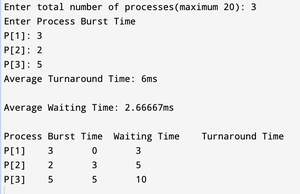
在此程序中,用户需要输入进程数及其各自的突发时间。然后,程序计算每个流程的等待时间和周转时间,并输出平均等待时间和平均周转时间。最后,程序会显示一个表格,其中显示了每个进程的详细信息。